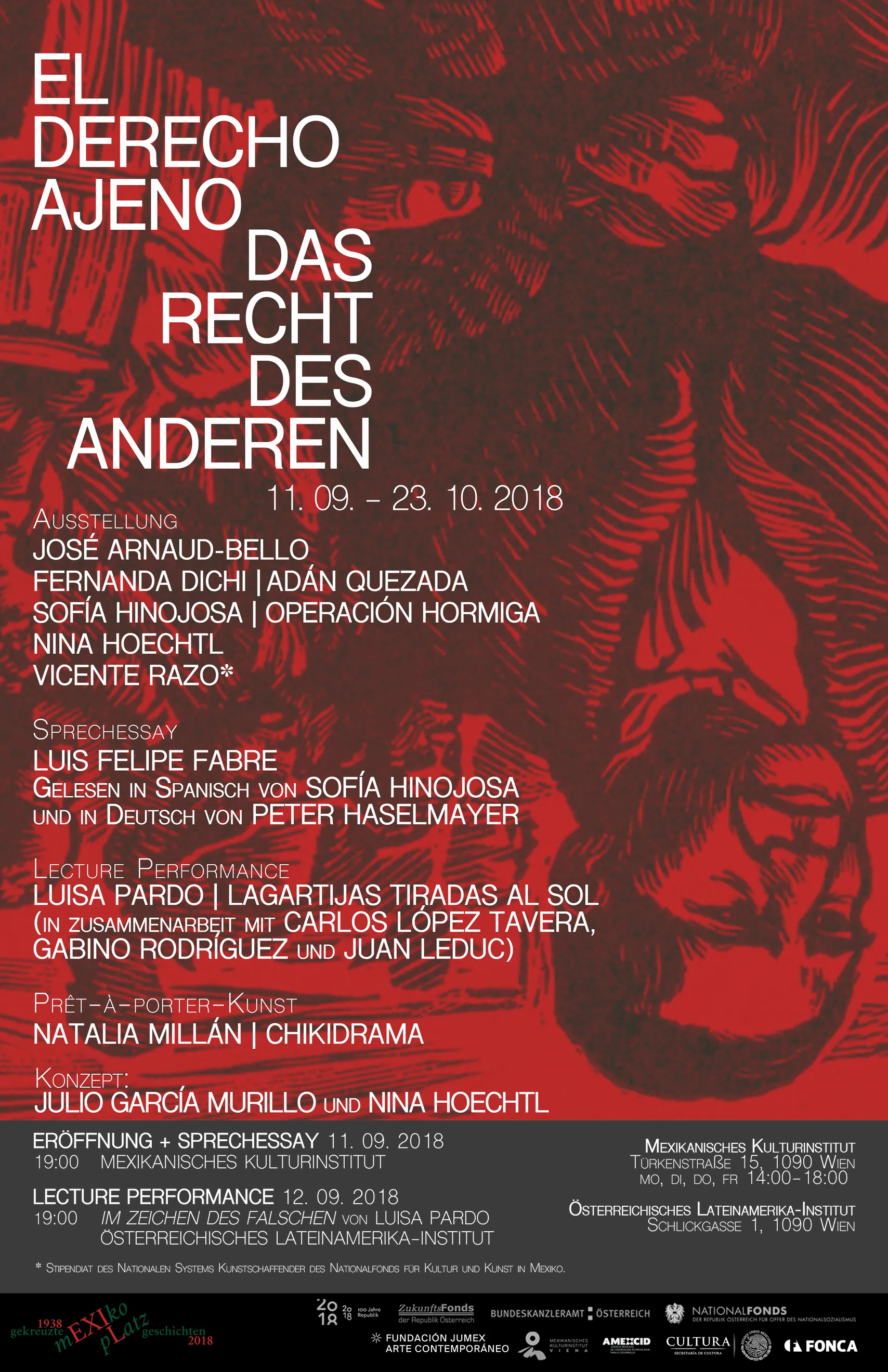
Decolonising the public university. A Collaborative and Decolonising Approach towards (Un)teaching and (Un)learning
María del Socorro (Coco) Gutiérrez Magallanes, Nina Hoechtl, Rían Lozano
This article examines the postgraduate Gender and Visual Culture seminar that we have been co-teaching as a team of two (and occasionally three) professors over a four-year period at the public National Autonomous University of Mexico. Throughout this seminar, we have embraced personal and collective experiences in the process of (un)teaching and (un)learning to explore the possibilities of a pedagogy of ‘contagion by contact’, both feminist and critical, encouraging creative formats.
Drawing from a range and diverse reflections, we seek to critically explore an amplified challenge of, and the need for, a collaborative and de(s)colon/ial/ising approach towards (un)teaching and (un)learning in the context of the public university as a contentious space of political engagement. This space requires a constant questioning of where to teach from (a politics of location), what to teach (culturally diverse and conflicting worldviews), and how to teach (critical and decolonising methodologies).
in Tijdschrift voor Genderstudies, Amsterdam University Press, Volume 21, Number 2, June 2018, pp. 153-170
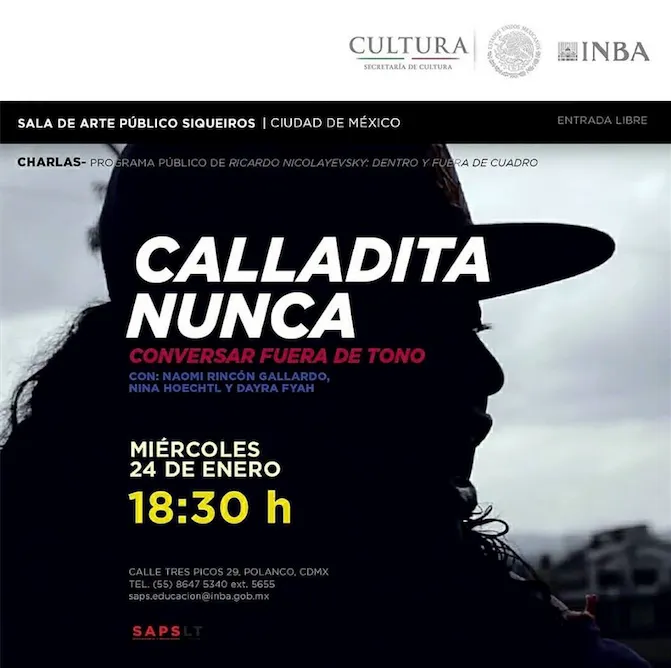
Conversaremos sobre letras, música y videos que utilizan la parodia para romper la automatización de la percepción. Escucharemos voces feministas, cuir, fuera de ritmo, chirriantes, géneros bastardos e irreverentes, y letras aún no cantadas pero ya conectadas en futuros alternativos.
La charla tiene como objetivo intercambiar estrategias y desafíos sobre formas de componer canciones de manera individual o colectiva, así como dialogar sobre la experiencia colaborativa en la creación musical.
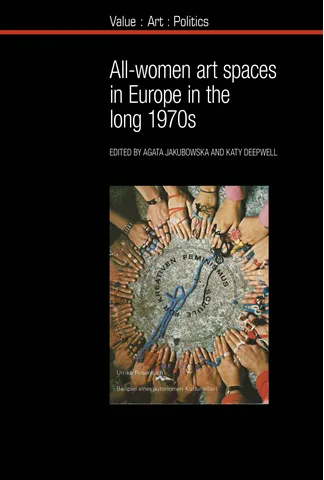
All-women art spaces in Europe in the long 1970s
Edited by Agata Jakubowska and Katy Deepwell
The texts gathered in this volume embrace women artists-only exhibitions, festivals, collective art projects, groups and associations, organised in the long 1970s in Europe (1968-1984). These all-women art initiatives are closely related to developments within the political and politicized women’s movement in Europe and America but what emerges is the varied and plural manner of their engagements with feminism(s) alongside their creation of ‘heterotopias’ in relation to specific sites/ politics/ collaborative art practices.
With texts by Katia Almerini, Susanne Altmann, Katy Deepwell, Fabienne Dumont, Nina Hoechtl and Julia Wieger, Agata Jakubowska, Monika Kaiser, Elke Krasny, Annika Öhrner, Márcia Oliveira, Kathleen Wentrack.